





Summary
- Developed LDM Res-Net with Python in a group, a lightweight and efficient model for real-time retinal vessel segmentation.
- Integrated dual multiscale residual blocks and an encoder-decoder architecture to enhance segmentation accuracy.
- Achieved high efficiency with only 0.961M learnable parameters and rapid training/inference speeds.
- Delivered demonstrations and presentations to the client.
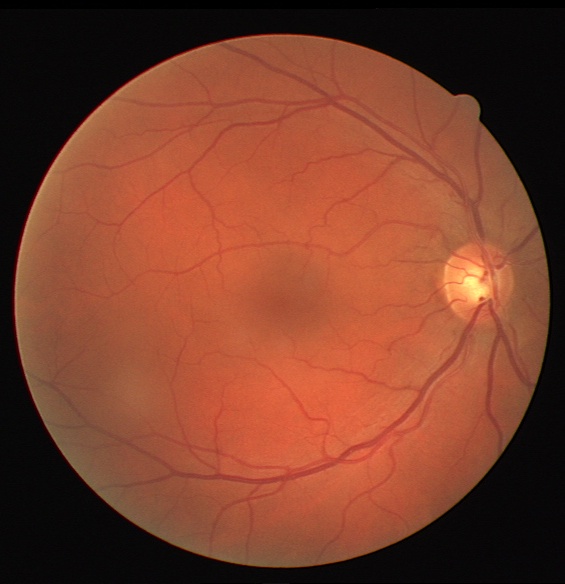
The project focuses on developing a highly efficient deep learning model for segmenting retinal vessels from medical images, crucial for diagnostic purposes in ophthalmology.
The model was trained using the DRIVE dataset and optimized for real-time inference, achieving impressive segmentation accuracy across multiple datasets (DRIVE, STARE, and CHASEDB1) with high sensitivity and specificity.
With fewer than 1 million parameters, LDMRes-Net offers a balanced approach, maintaining high accuracy while ensuring faster processing times (under 1 second). The model’s architecture is designed to efficiently capture varies features of retinal vessels, using dual multiscale residual blocks to improve feature extraction.


